LAP - Lab of Artificial Photosynthesis

LAB OF ARTIFICIAL PHOTOSYNTHESIS · AI4SCIENCE

AI-Driven Computation for Artificial Photosynthesis

Integrating high-throughput density functional theory, machine-learning interatomic potentials, and autonomous AI-agent workflows to accelerate catalyst discovery and mechanistic understanding for photocatalytic and electrocatalytic CO2 conversion.

01 ML Catalyst Screening
02 Neural Potentials (MLIP)
03 AI-Agent Workflows
CLOSED-LOOP ARCHITECTURE Hover or click a stage
LAP AI4Science Closed-Loop Architecture Three-stage scientific intelligence loop linking HPC & DFT, ML/MLIP/Agents, and Catalysis Experiments. LAP AI4S 01 · COMPUTE HPC & DFT 02 · INTELLIGENCE ML · MLIP · Agents 03 · VERIFICATION Catalysis Feedback
01 · COMPUTE

High-throughput DFT calculations on LAP's PBS-managed HPC cluster generate structured energetic, electronic, and transition-state datasets.

CORE RESEARCH DIRECTIONS

Three Pillars of AI-Enabled Catalysis

Moving beyond isolated single-point calculations toward scalable, data-driven discovery across electronic structure, atomistic dynamics, and autonomous computational execution.

01 DISCOVERY
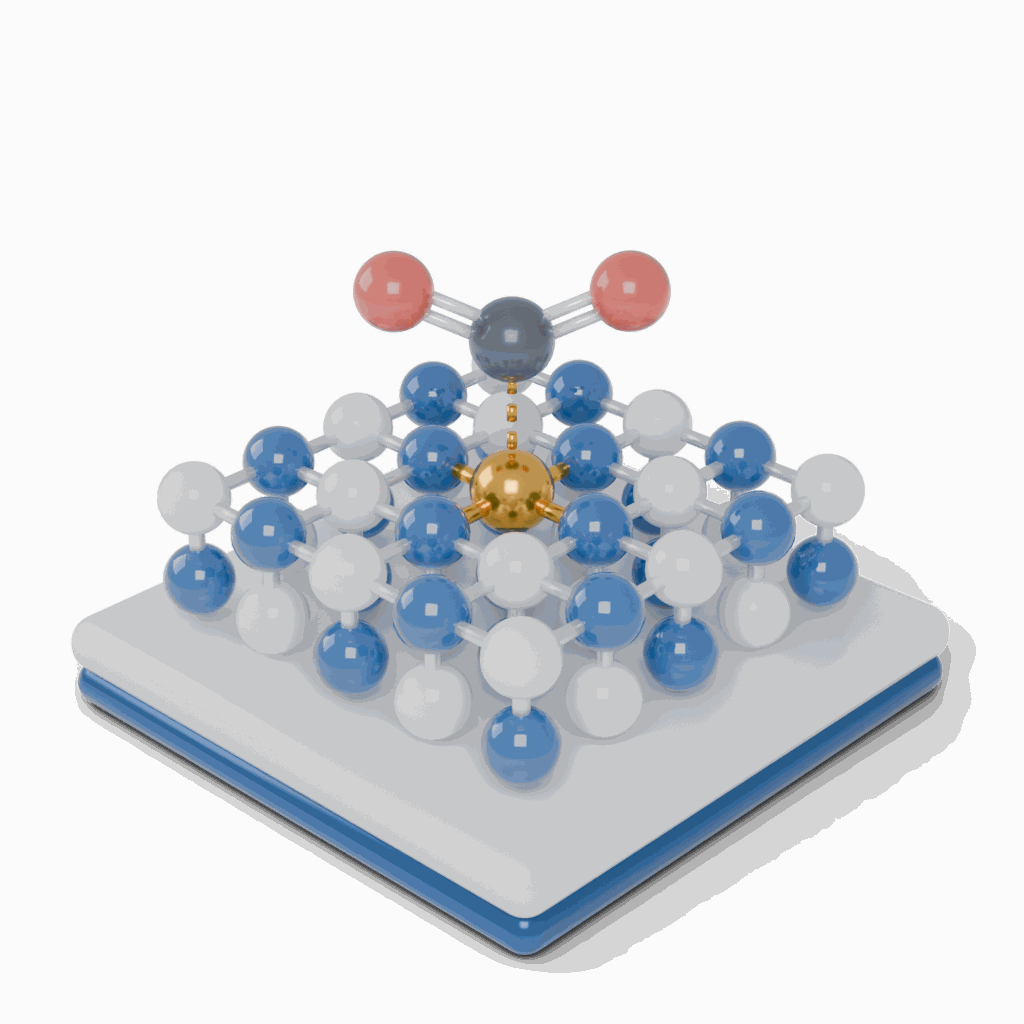
3D miniature of a crystalline catalyst lattice with a golden single-atom active site and an activated bent *CO2 adsorbate

Machine-Learning Catalyst Screening

We build interpretable descriptor-based and graph-neural surrogate models trained on curated adsorption and electronic-structure datasets. By mapping local coordination environments to overpotential and product selectivity, we narrow thousands of candidate active sites down to synthesizable targets for CO2 photoreduction and electroreduction.

  • Active-Site Descriptors
  • GNN Surrogates
  • CO2RR Selectivity
  • Active Learning
02 DYNAMICS
3D miniature of a sculpted blue potential energy surface with a golden minimum-energy reaction pathway and transition-state sphere

Machine-Learning Interatomic Potentials

Realistic catalytic interfaces involve explicit solvents, dynamic surface reconstruction, and long-timescale proton-coupled electron transfer beyond standard ab initio MD. We train equivariant neural potentials on DFT trajectories to simulate large-scale solid–liquid interfaces at near-first-principles accuracy and orders-of-magnitude lower cost.

  • DeePMD & MACE
  • Explicit Solvent AIMD
  • Surface Reconstruction
  • Enhanced Sampling
03 AUTOMATION
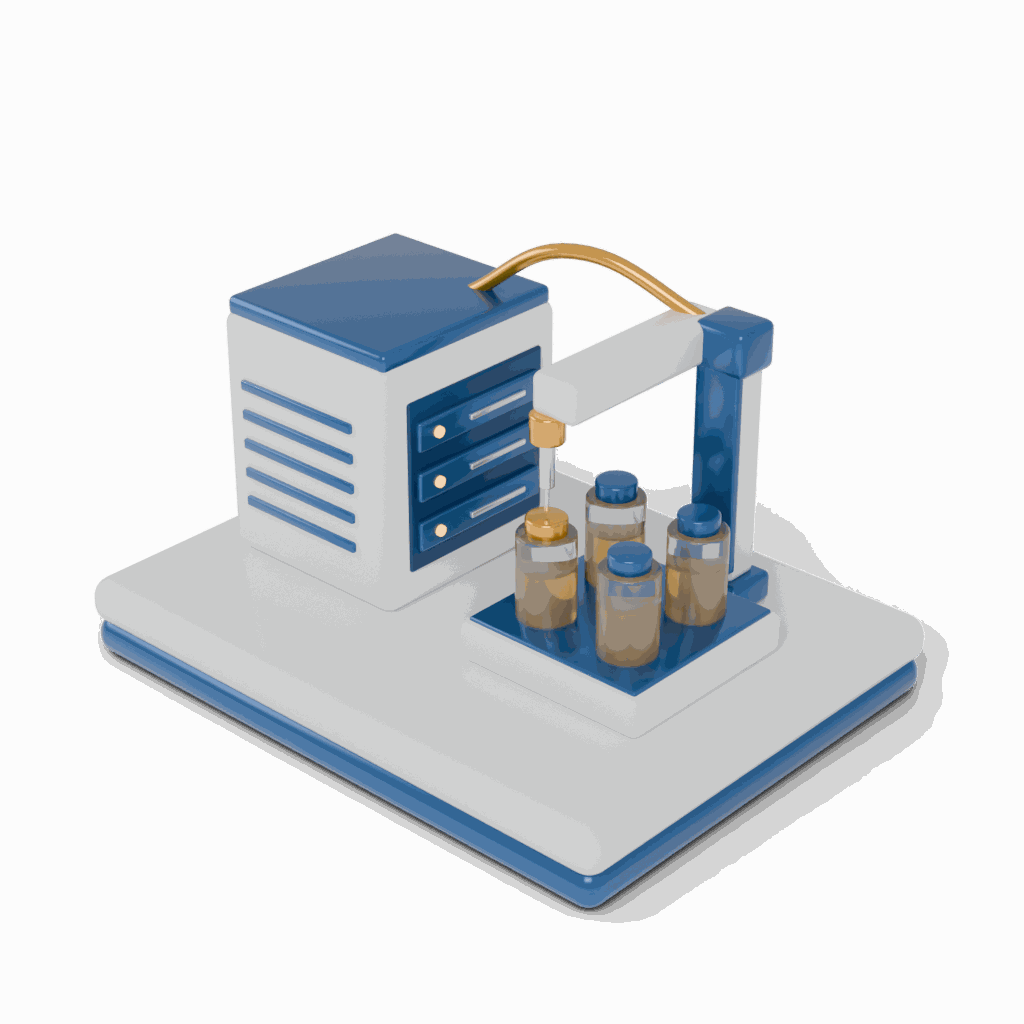
3D miniature of an HPC compute node linked via a golden optical bridge to an automated robotic pipette and catalytic vial array

AI Agents for Computational Workflows

We develop LLM-powered scientific agents coupled with deterministic chemistry tools to automate repetitive computational tasks—from literature mining and slab generation to PBS job submission, convergence diagnostics, error recovery, and structured analysis—freeing researchers to focus on physical insight.

  • LLM Tool-Use Agents
  • Auto-Error Recovery
  • DFT Orchestration
  • Literature-to-Input

METHODOLOGY

From Hypothesis to Validated Active Site

A reproducible four-stage workflow designed to keep first-principles physics rigorous while leveraging machine learning and agents for high-dimensional exploration.

  1. STEP 01

    Structure & Space Generation

    Enumerate doped surfaces, single-atom sites, and reaction intermediates programmatically via ASE and pymatgen templates.

  2. STEP 02

    Autonomous HPC Execution

    Dispatch batched DFT and MLIP jobs across PBS queues with automated convergence checks, restart handling, and provenance logging.

  3. STEP 03

    Model Training & Screening

    Extract electronic descriptors and forces to train surrogate predictors and neural potentials, prioritizing high-uncertainty candidates.

  4. STEP 04

    Experimental Feedback

    Translate top-ranked motifs into synthesis hypotheses for LAP's wet lab, feeding measured activity and selectivity back into the next iteration.

INFRASTRUCTURE

Compute Foundation & Software Stack

Powered by LAP's dedicated high-performance computing environment, uniting plane-wave DFT engines, GPU-accelerated deep learning, and reproducible workflow automation.

SCHEDULING & ORCHESTRATION PBS Batch Cluster

Multi-queue job management separating interactive prototyping from long-running DFT and MD production workloads.

HETEROGENEOUS COMPUTE CPU + GPU Nodes

High-core-count CPU nodes for parallel plane-wave DFT paired with GPU acceleration for neural potential training and inference.

DATA & REPRODUCIBILITY Structured Pipelines

Standardized input templates, automated trajectory archiving, and versioned Python scripts shared across the laboratory.

Core Software & AI Toolchain

Filter by layer to inspect our computational ecosystem

  • VASP DFT

    Periodic plane-wave DFT for catalytic surfaces, adsorption energetics, and NEB transition states.

  • CP2K AIMD

    Large-scale ab initio molecular dynamics for explicit solid–liquid catalytic interfaces.

  • Gaussian / ORCA Quantum

    Molecular orbital, excited-state, and spectroscopic calculations for molecular catalysts and clusters.

  • PyTorch & PyG Deep Learning

    Graph neural networks and custom property-prediction architectures for catalyst screening.

  • DeePMD-kit / MACE MLIP

    Equivariant and deep neural interatomic potentials bridging DFT accuracy with nanosecond MD.

  • Scikit-learn / SISSO Descriptors

    Interpretable feature selection and symbolic regression for physical catalysis descriptors.

  • ASE & pymatgen Automation

    Programmatic structure manipulation, slab construction, and standardized output parsing.

  • LLM Agent Pipelines AI Agent

    Tool-augmented agents for literature extraction, input preparation, and automated DFT error recovery.

  • PBS & LAMMPS HPC Runtime

    Cluster job scheduling paired with GPU-accelerated classical and ML-potential molecular dynamics.
AI4SCIENCE · KNOWLEDGE & UPDATES

AI4Science Articles & Tutorials (1)

View All Lab Articles →